Laboratory visit
A short look inside the laboratory workflow: sample reception, preparation and instrumental analysis.
Scientific context
Fur can integrate mineral and exposure signals over time.
Results must be interpreted in the animal’s clinical, nutritional and environmental context.
Inside the laboratory
Independent laboratory workflow — no supplement sales, no commercial interpretation bias.
Fur Analysis is performed by Delta-Biomarkers SAS, an independent analytical laboratory in France.
Samples are prepared and analysed using advanced instrumental methods such as ICP-MS for minerals and toxic metals. Additional environmental exposure panels are developed using high-resolution mass spectrometry.
Our objective is not to replace veterinary diagnosis, but to provide reliable analytical data that can support discussion, monitoring and follow-up.
A short look inside the laboratory workflow: sample reception, preparation and instrumental analysis.
Watch the webinar section explaining mineral and toxic metal testing in fur and hair at 17 min.
Fur and hair are useful matrices for studying exposure over a longer period of time. During growth, circulating elements can be incorporated into the fur structure and remain detectable.
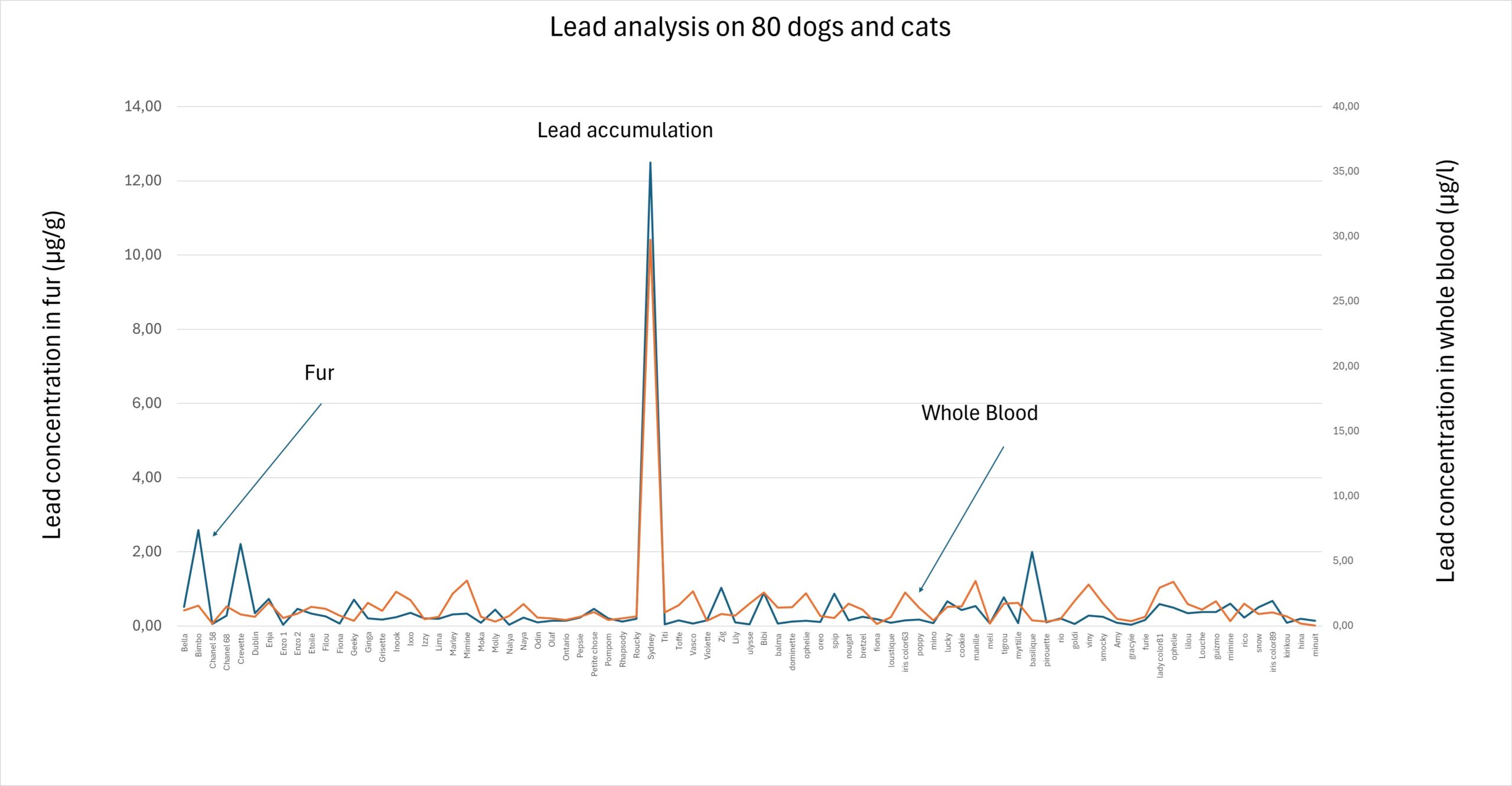
Blood analysis is useful, but blood often reflects a shorter-term status. Fur analysis can help document integrated exposure and mineral trends over several weeks.
Sampling is simple and non-invasive. Washing and preparation are integrated into the laboratory procedure before mineralisation and ICP-MS analysis.
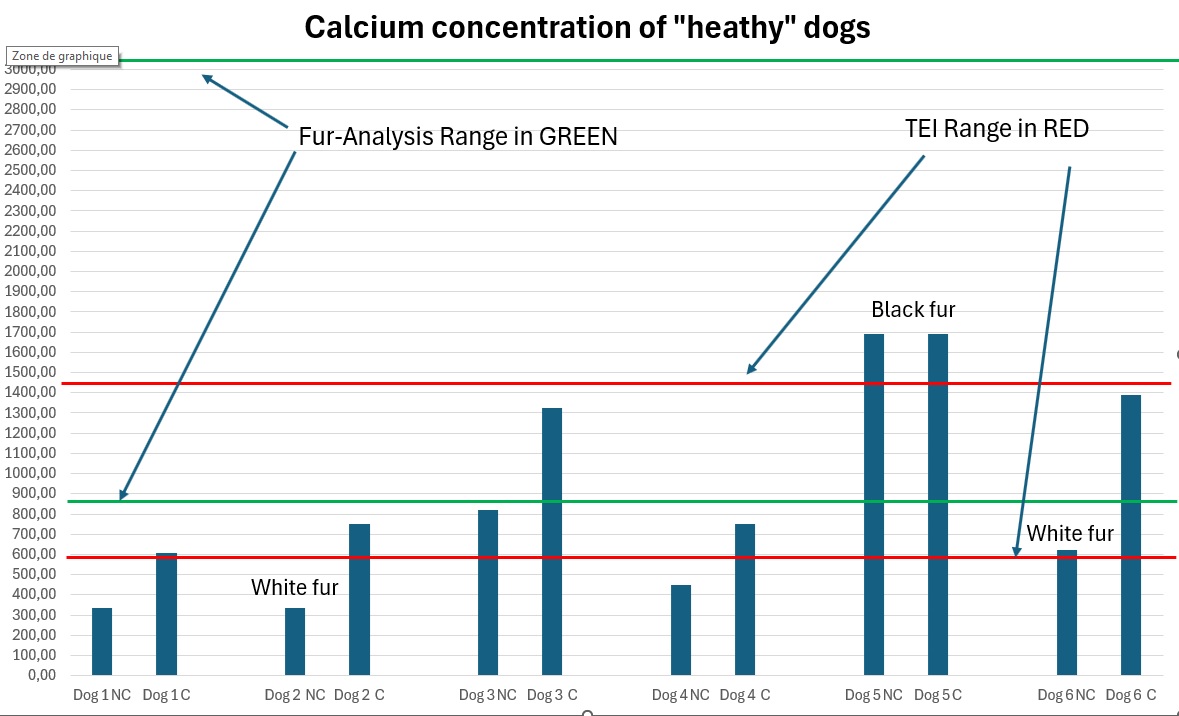
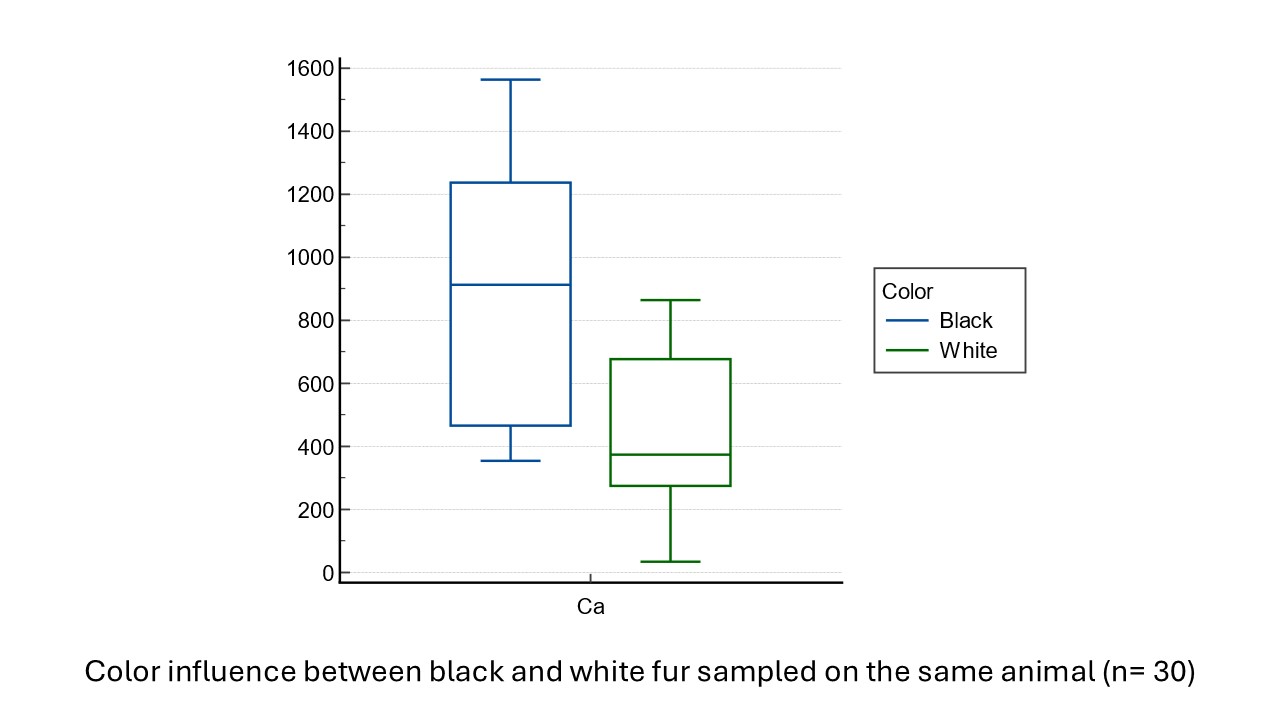
Fur results can be influenced by external contamination, coat colour, grooming, diet, age, breed and environment.
Interpretation must always consider the animal’s history, lifestyle, possible exposure sources and clinical context.
Fur Analysis is a complementary analytical service, not a replacement for veterinary diagnosis.
Analytical scope
Fur Analysis focuses on three main analytical areas: essential minerals, toxic metals and environmental exposure markers. The objective is to provide clear laboratory data that can support monitoring, prevention and professional discussion.
Calcium, magnesium, zinc, copper, selenium and other nutritional elements involved in mineral balance and long-term follow-up.
Lead, arsenic, cadmium, mercury and other elements associated with environmental, dietary or lifestyle exposure.
Pesticides and PFAS are already available. Glyphosate and selected mycotoxins are under development.
Laboratory evidence
Fur Analysis combines controlled sample preparation, instrumental analysis and careful interpretation to produce clear reports for professionals and animal owners.
Scientific caution
Fur Analysis does not diagnose disease and does not replace veterinary examination, blood testing or clinical decision-making.
Results should always be interpreted together with the animal’s age, breed, coat colour, diet, environment, medical history and possible exposure sources.
Fur Analysis does not sell supplements. Reports are designed to clarify analytical data, not to sell products.
SCIENTIFIC GUIDE
Understand what animal hair analysis can reliably measure, its scientific limitations, and the quality controls required for meaningful interpretation.
ANALYTICAL DIFFERENTIATOR
See why pigmentation can shift mineral concentrations and how FurAnalysis applies continuous, element-specific correction to reduce avoidable bias.